The Kentucky Rider's Guide to Motorcycle Injury Compensation
Presented by Karl Truman Law Office · Louisville, Kentucky
Member, National Academy of Motorcycle Injury Lawyers
Chapter 1
A Message to Louisville's Riders
The only thing worse than being seriously hurt in a motorcycle crash is not getting the compensation you deserve, or finding out later that an insurance company took advantage of you.
Insurance companies have every advantage. They aren't worried about medical bills, lost wages, or putting food on the table. Their adjusters are trained to diminish, devalue, and deny motorcycle claims, and behind them stands an army of lawyers whose only job is to pay you as little as possible.
Here's the truth: you don't have to face them alone. Karl Truman Law Office has fought for injured Kentucky and Southern Indiana riders since 1991, and through our membership in the National Academy of Motorcycle Injury Lawyers (NAMIL), we stand up for injured Louisville riders. We know how insurers operate, and we don't back down.
If you've been hurt, don't wait. Every day that passes is another day the insurance company is working against you. Call (502) 222-2222 for straight answers.
Chapter 2
The Firm in Your Corner
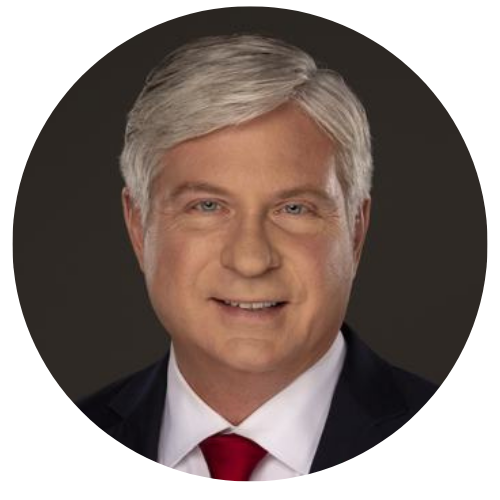
Karl Truman
Founder, Karl Truman Law Office · U.S. Army, Retired Lieutenant Colonel
Karl Truman enlisted in the Army in 1981 and earned his commission as a Second Lieutenant through Army ROTC at the University of Kentucky in 1983, going on to serve 28 years and retiring as a Lieutenant Colonel in 2009. He earned his Juris Doctor from the University of Louisville in 1987 and founded the Karl Truman Law Office in 1991, serving clients across greater Louisville, Kentucky and Jeffersonville, Indiana ever since.
Why riders can trust this firm
Certified Civil Trial Specialist by the National Board of Trial Advocacy, with additional certification in Pre-Trial Procedure.
Licensed to practice in both Kentucky and Indiana, admitted before the U.S. District Courts for the Southern and Northern Districts of Indiana and the Western and Eastern Districts of Kentucky.
28 years of U.S. Army service, retiring as a Lieutenant Colonel, before fighting for injured riders as a civilian trial lawyer.
Past president of the Clark County (Indiana) Bar Association.
Honored with the Consumer Advocate Award by the Indiana Trial Lawyers Association for free legal work on the 9/11 Victims Compensation Fund.
Firm Coordinates
Karl Truman Law Office · 10531-B Timberwood Circle, Louisville, KY 40223 Also serving Jeffersonville, IN · (502) 222-2222 · trumanlaw.com
Chapter 3
Don't Get Played by the Adjuster
The first thing the other driver's insurer wants is a recorded statement and a signed release. Don't give either. Once they have your words on tape, they will twist them to deny or minimize your claim. If you think you can handle an adjuster alone, test them with these questions and watch the red flags appear.
11 Questions Every Rider Should Ask an Adjuster
Will you put in writing that the crash was not my fault?
What are your insured's policy limits? Show me the declaration page.
Can I have a copy of your insured's recorded statement?
If you want my medical records, will you give me copies of everything you collect?
Will you share statements from other witnesses?
Does your insured have umbrella or secondary coverage? Put it in writing.
What personal or medical information have you gathered on me from databases?
Have you pulled my credit report or debt information?
Have you canvassed my neighbors or people I know?
Have you conducted surveillance on me? Show me the photos or video.
What reserve amount have you set on my case?
If the adjuster says "no" to any of these, that's a flashing warning sign they don't intend to treat you fairly.
Chapter 4
Five Strategies That Can Grow Your Settlement
These aren't tricks. They're proven habits that can significantly increase the value of your case if you start them early.
1. Take photos, lots of them.
The scene, your injuries, your bike, the other vehicles, your recovery. Pictures tell a story words can't.
2. Get diagnosed for every injury.
Don't shrug off "minor" pain. If it isn't in your medical record, insurers will argue it came from something else.
3. Follow doctor's orders.
Every appointment, every therapy session. Skipping care is the easiest way to tank a claim.
4. Bring in the right experts.
Accident reconstructionists, medical life-care planners, and economists make your damages undeniable.
5. Negotiate the medical bills.
Even after you win, reducing outstanding bills keeps more money in your pocket. A good firm does this for you every day.
Chapter 5
Five Mistakes That Can Ruin Your Claim
Giving a recorded statement. Never let the other driver's adjuster record you.
Believing the adjuster. If they say you don't have a case or you're at fault, get a lawyer's opinion first.
Failing to capture evidence. Skipping photos of the scene, vehicles, or injuries is a mistake you can't undo.
Missing medical appointments. Every gap in treatment becomes ammunition that you "weren't really hurt."
Representing yourself. You're too close and too untrained in the maneuvering. Your words can be used against you. A lawyer's can't.
Chapter 6
Kentucky Motorcycle Insurance Essentials
Most riders don't realize how little coverage Kentucky law requires, and the state's minimums haven't kept pace with real medical costs.
Kentucky Minimum Coverage (KRS 304.39-110)
25 / 50 / 25
$25,000 bodily injury per person · $50,000 per crash · $25,000 property damage (or a single limit of $60,000). Kentucky also requires Personal Injury Protection (PIP) of at least $10,000 (KRS 304.39-020), which pays your own medical bills regardless of fault.
A single surgery can top $100,000. Rehab and lost wages pile on fast. Kentucky's minimums were set in 1974 and have barely moved since, if the driver who hits you carries only the minimum, you'll be left with pennies unless you protected yourself.
What riders should carry
Liability: at least 100/300 if you can.
UM/UIM: match your liability limits, this is your real lifeline in Kentucky.
PIP: the $10,000 minimum is often not enough; ask about raising it.
Umbrella: worth it if you own a home or assets.
Chapter 7
The UM/UIM Lifesaver: A Real-Numbers Story
Picture a rider hit by a driver who ran a red light. Medical bills alone top $250,000. The problem: the at-fault driver carried only the Kentucky minimum, $25,000 in liability.
Without protection, that rider is financially ruined. But say they carried Underinsured Motorist coverage of $250,000. When the at-fault driver's insurance runs out, their own UIM picks up the rest.
The Math
At-fault driver's insurance: $25,000 Your UIM coverage: $250,000 Total available: $275,000
Riders skip UM/UIM to save a few bucks. Don't. In Kentucky it's the difference between recovery and ruin.
Chapter 8
What Is My Case Worth in Kentucky?
There's no magic calculator, but three factors drive most of it: liability (how clearly the other driver is at fault), available insurance (policy limits set the ceiling), and your lawyer (insurers track which firms actually try cases).
Kentucky's Pure Comparative Fault Rule
Kentucky uses pure comparative negligence. Unlike most states, there is no cutoff, you can recover damages even if you were mostly at fault, reduced by your percentage of responsibility. That said, insurers still fight hard to pin blame on riders, since every percentage point reduces what they owe.
Other factors adjusters weigh: the severity and permanence of your injuries, current and future medical bills, lost wages and earning capacity, your credibility, and the at-fault driver's conduct (impaired? distracted?).
Chapter 9
Timeline: How Long Until It Settles?
Never settle too soon. Insurers dangle quick low offers before you know the full extent of your injuries.
Wait for Maximum Medical Improvement (MMI). Settle before you've healed as much as you will, and you're gambling with your future care.
After treatment, expect 3–6 months to gather bills, build a demand, and negotiate.
Kentucky Deadline
You generally have two years from the date of injury to file a personal-injury lawsuit in Kentucky. Miss it and your claim is gone. Don't wait to get advice.
Chapter 10
Do I Have to Go to Court?
"I'm not the suing type." We hear that a lot. The truth: you're the boss, and most cases settle before trial. But filing suit is sometimes how you make a stubborn insurer pay full value. It opens access to records, statements, and depositions, and it tells the insurer you're serious. Having a firm willing to try the case is often what makes the difference, even if you never see a courtroom.
Chapter 11
Evidence Wins Cases: Your Post-Crash Playbook
Immediately after a crash
Photograph the scene, vehicles, your bike, your gear, and your injuries.
Get witness names and numbers.
Call police and get the crash report.
Save your gear, don't toss the helmet, jacket, or gloves. They prove impact.
Medical evidence is everything
Report every symptom, even "small" ones. Undocumented means denied.
Follow treatment. Keep a simple pain journal (pain, sleep, mobility).
Helmet-cam or dash-cam footage can be a game-changer.
Chapter 12
Louisville & Kentucky Riding Risks
The Snyder Freeway & I-64/I-65/I-71 split. Louisville's interstate interchanges are notorious for merging traffic and sudden lane changes. Own your lane and assume they don't see you.
Ohio River bridges. Expansion joints and steel-grate sections get slick, especially in wet weather.
Rural Bluegrass roads. Beautiful riding, but blind rises, loose gravel on shoulders, and horse-farm traffic (trailers, slow-moving equipment).
Weather swings. Sudden storms turn oily pavement slick fast. Rainbow sheen on the road means oil, avoid it.
Kentucky's Helmet Law
Kentucky requires a helmet for riders under 21, those with an instructional permit, and operators licensed for less than a year. Riders 21 and older who have held a valid motorcycle license for at least a year, or completed an approved safety course, may ride without one. If you don't meet an exemption and skip the helmet, an insurer can use it against you to reduce your recovery.
Chapter 13
Ride Safer: Pro Tips for Kentucky Riders
Braking & cornering
Finish braking before you enter a curve.
Avoid hard braking on painted surfaces and crosswalks.
Practice emergency stops in a safe lot. Muscle memory saves lives.
Night & rain
Double your following distance.
Ride in a car's tire track to avoid water pooling in the lane center.
First rain after a dry spell is the most slippery. Ease off.
Gear & visibility
Bright jacket and reflective tape change whether drivers see you at intersections.
Add auxiliary lights to grow your profile in traffic.
Check your tire date code (4-digit DOT) and replace tires every 5–6 years regardless of tread.
Chapter 14
Results, Reviews & Community
Karl Truman has represented injured Kentucky and Southern Indiana riders since founding his firm in 1991, bringing the discipline of 28 years of Army service and Lieutenant Colonel rank to every case. He's a past president of the Clark County Bar Association and was honored with the Indiana Trial Lawyers Association's Consumer Advocate Award for his work on the 9/11 Victims Compensation Fund.
For Karl's approval before publishing: insert 2–3 real, firm-approved case results and a few verified client testimonials here. Per bar advertising rules and our own standard, we won't publish specific results or quotes that the firm hasn't reviewed and approved. Until then this section stays general.
Chapter 15
Your Next Step: A Free Case Review
If you've been hurt in a motorcycle crash, don't go it alone. The insurance company has a team of lawyers. So should you.
When you call Karl Truman Law Office, you'll talk to a real person, get your questions answered, and learn your rights before you sign anything. No pressure, no obligation, and if we take your case, you don't pay unless we win.
PIP: Personal Injury Protection, pays your own medical bills regardless of fault.
Pure comparative fault: Kentucky's rule letting you recover damages reduced by your share of fault, with no cutoff percentage.
D · About NAMIL
The National Academy of Motorcycle Injury Lawyers is a nationwide network of attorneys dedicated to injured riders. Membership is limited to firms committed to bikers' rights. Karl Truman Law Office is NAMIL's member firm for the Louisville market.